Plant Tissue Processing for Microtomy
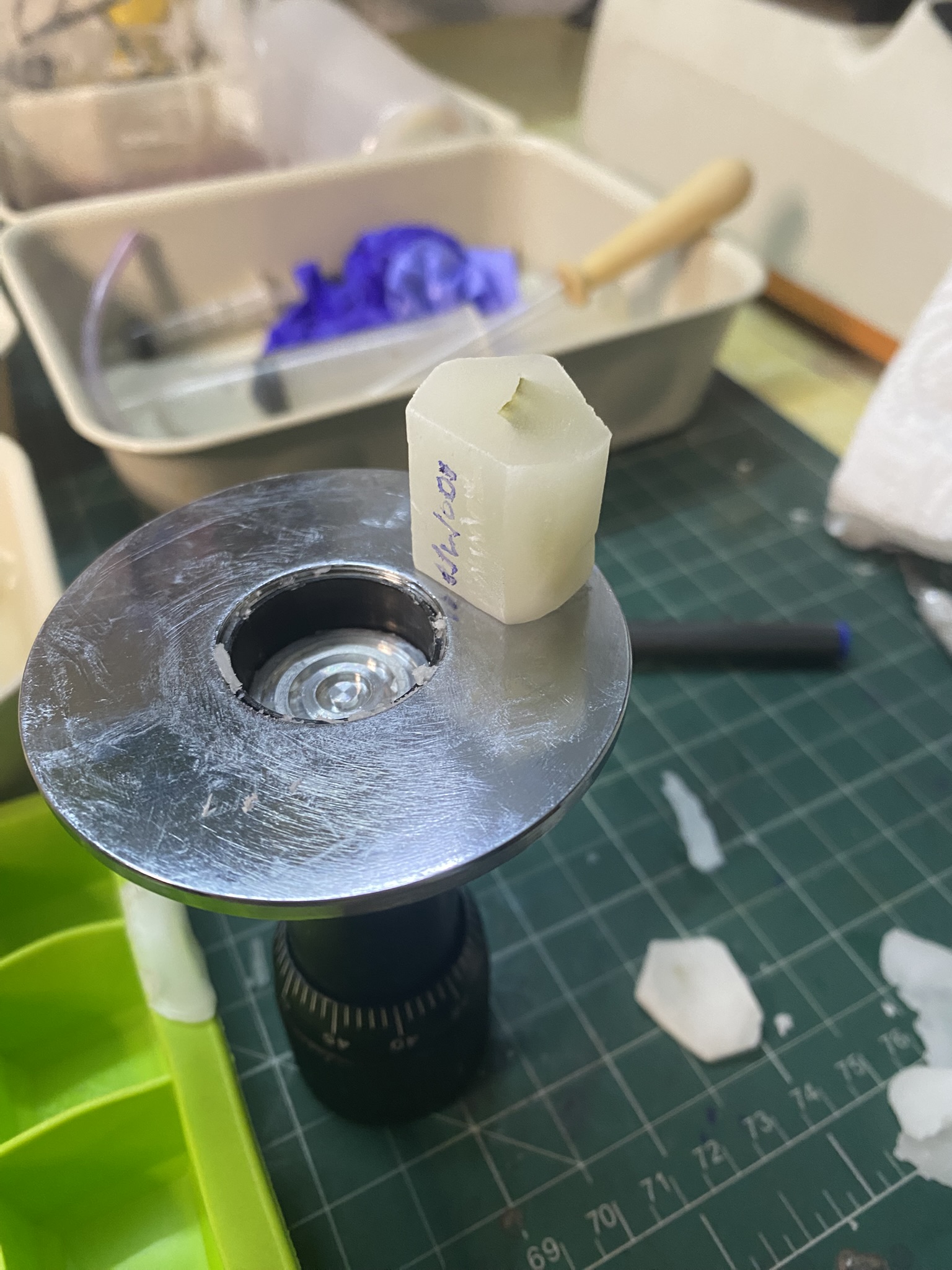
In the quest to improve the quality of my microscope slides, I set up a tissue processing protocol for myself. This protocol enables the tissue to be infiltrated in paraffin wax, which is then cut into fine sections (5-10μm) using a hand/table microtome.
As usual, conscious about the toxic chemicals used in standard tissue processing (formaldehyde and xylene), after extensive research (such as reading up the Leica Xylene-Free Tissue Processing article) I was able to develop an alternative protocol. This involved substituting the xylene clearing agent with 2-propanol and mineral turpentine oil, and seeking out an alternative fixative.
The final protocol I settled on is given below:
| Stage | Description |
|---|---|
| 1: Fixation (3 hrs) | Fixation in Farmer’s Fluid, which is a mixture of ethanol and glacial ethanoic acid (3:1 ratio) |
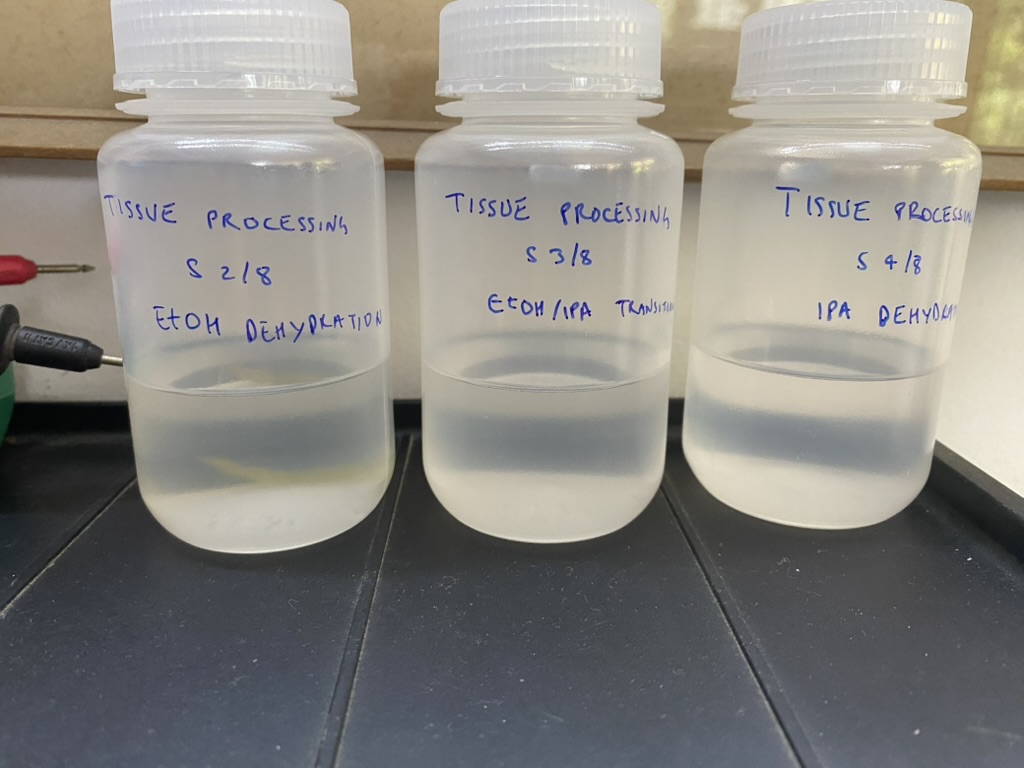
| 2: EtOH Dehydration (1 hr) | Dehydration in absolute ethanol |
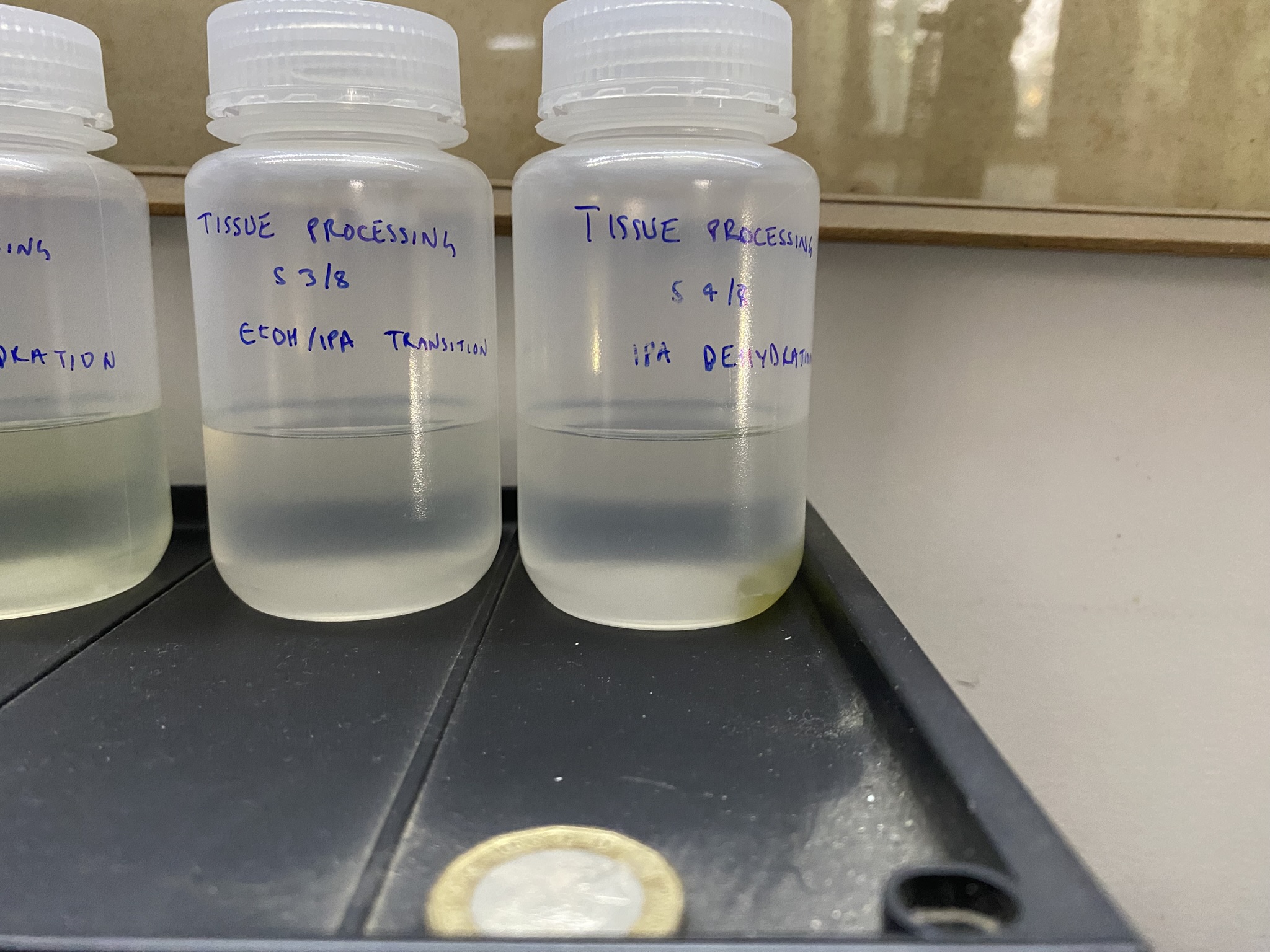
| 3: IPA/EtOH Transition (1 hr) | Transitioning into isopropanol, by using a 80:20 IPA/EtOH mix |
| 4: IPA Dehydration (1 hr) | Dehydration in absolute isopropanol |
| 5: MTO Clearing 1/2 (1 hr) | Clearing in mineral turpentine oil (bath 1) |
| 6: MTO Clearing 2/2 (1 hr) | Clearing in mineral turpentine oil (bath 2) |
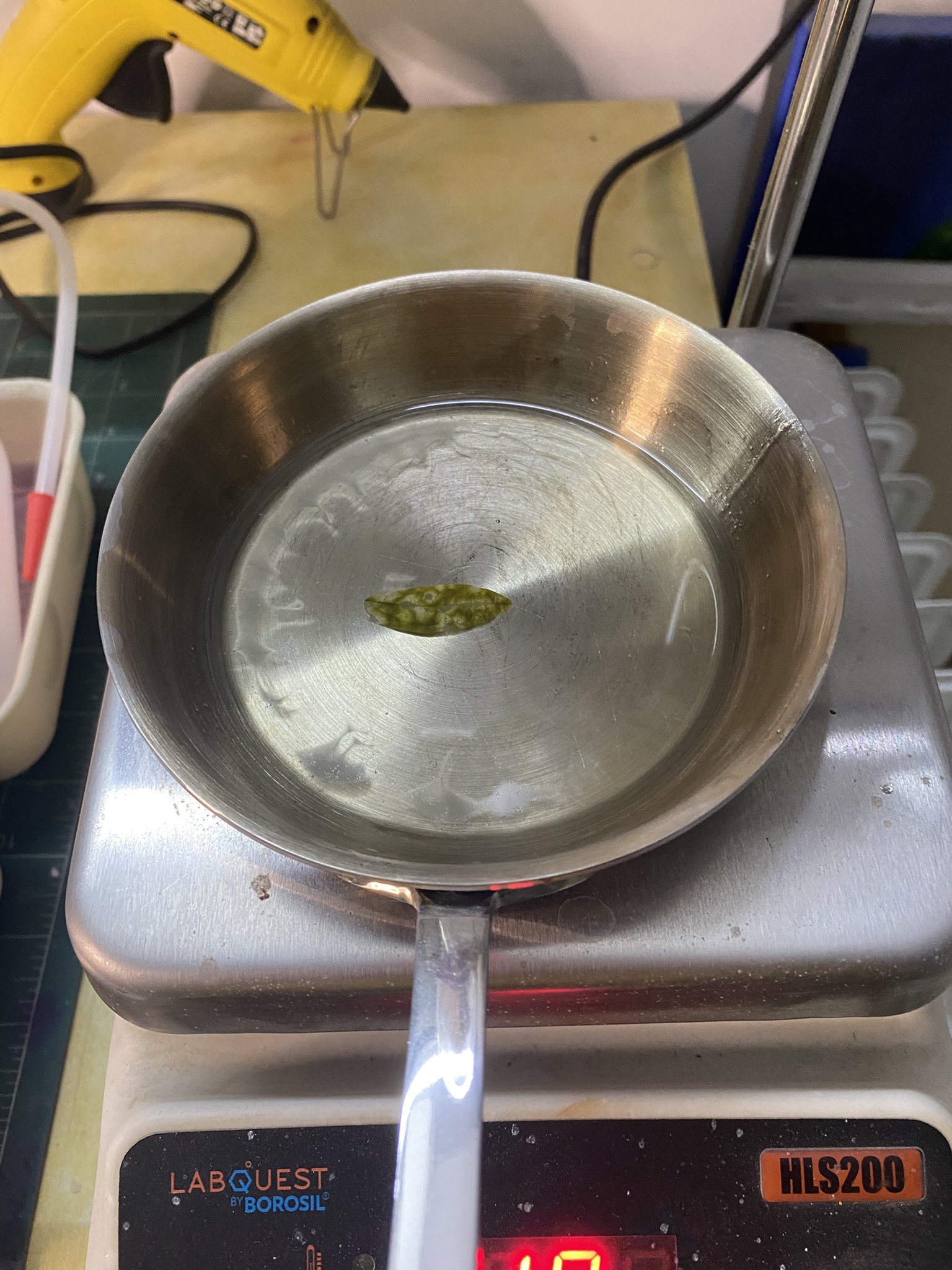
| 7: Paraffin Infiltration 1/2 (75 min) | Infiltration with molten paraffin (bath 1) |
| 8: Paraffin Infiltration 2/2 (75 min) | Infiltration with molten paraffin (bath 2) |
I decided to opt out of a gradual ethanol gradient for dehydration (i.e. successive baths of 50%, 70%, 90%, and 100% ethanol) because my fixative contains no added water (unlike formaldehyde-based fixatives). Hence, placing the tissue in 70% ethanol after the fixation stage would actually constitute rehydration. The IPA/EtOH transition is made in accordance with the Leica Xylene-Free processing protocol: IPA is less polar than ethanol, and hence is the more apt alcohol for paraffin infiltration. However, unlike the Leica protocol - since I don’t have a vacuum chamber to draw out IPA from the tissue during paraffin infiltration - I decided to use mineral turpentine oil (a non-polar solvent) to ensure complete infiltration of the tissue.
13 June 2026
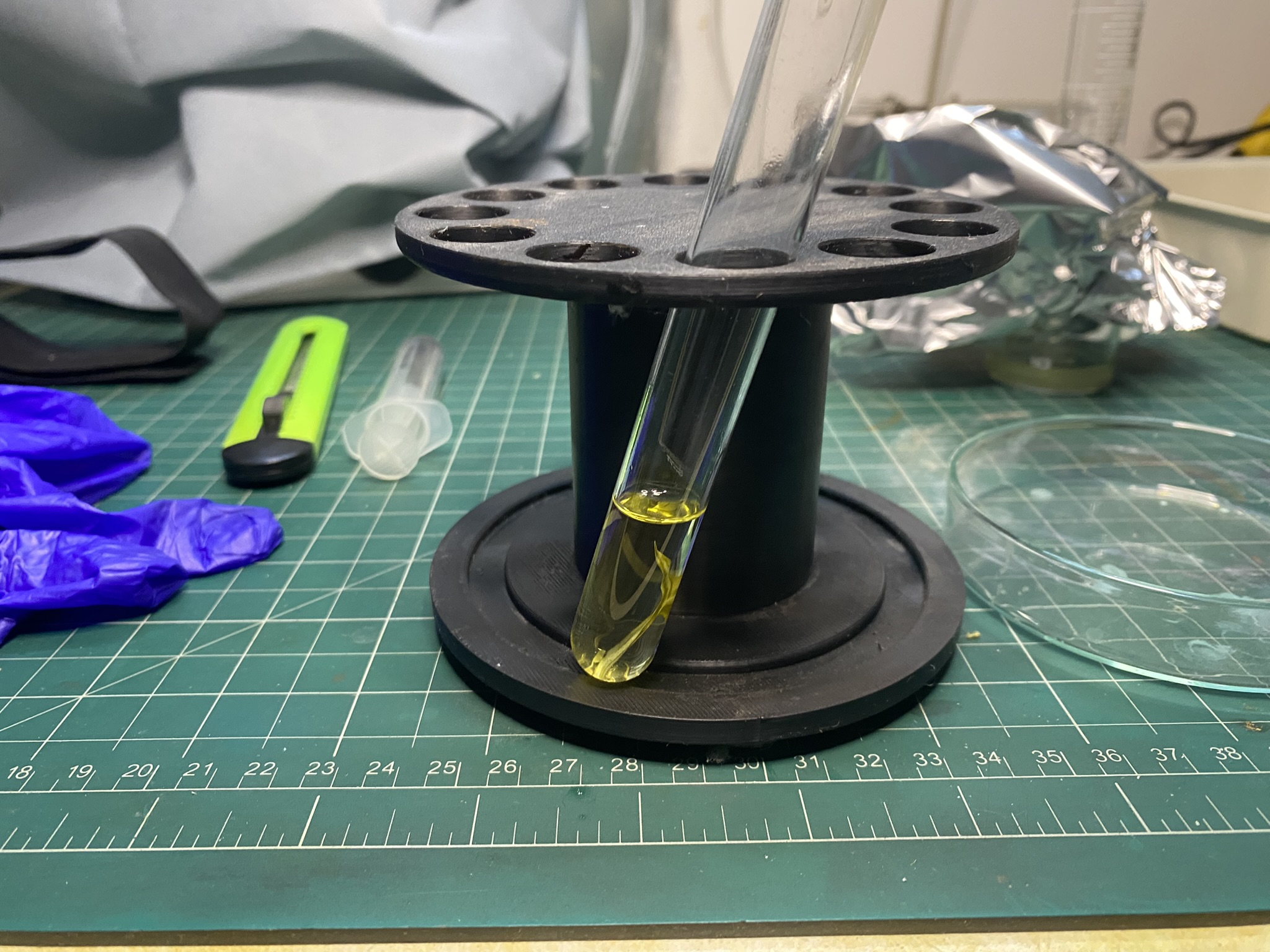
Today, I finally collected all the necessary chemicals to test out this alternative protocol. I began in the morning by plucking a leaf from a plant in a local park. This would be my sample.