Millionaire's Shortbread
Today, feeling the urge to make a sweet treat, I experimented with Millionaire’s Shortbread, a Scottish confectionary which consists of a layer of shortbread, topped with a layer of (fudge-like) caramel, topped with a layer of milk chocolate. Being one of those people who is greatly in love with the combined taste of chocolate and orange, I used orange-flavoured dark chocolate in lieu of the milk chocolate. Scrolling through various recipes, I chanced upon Jamie Oliver’s recipe of chocolate orange shortbread, and hence came up with the idea of incorporating parts of that recipe with the recipe for millionaire’s shortbread.
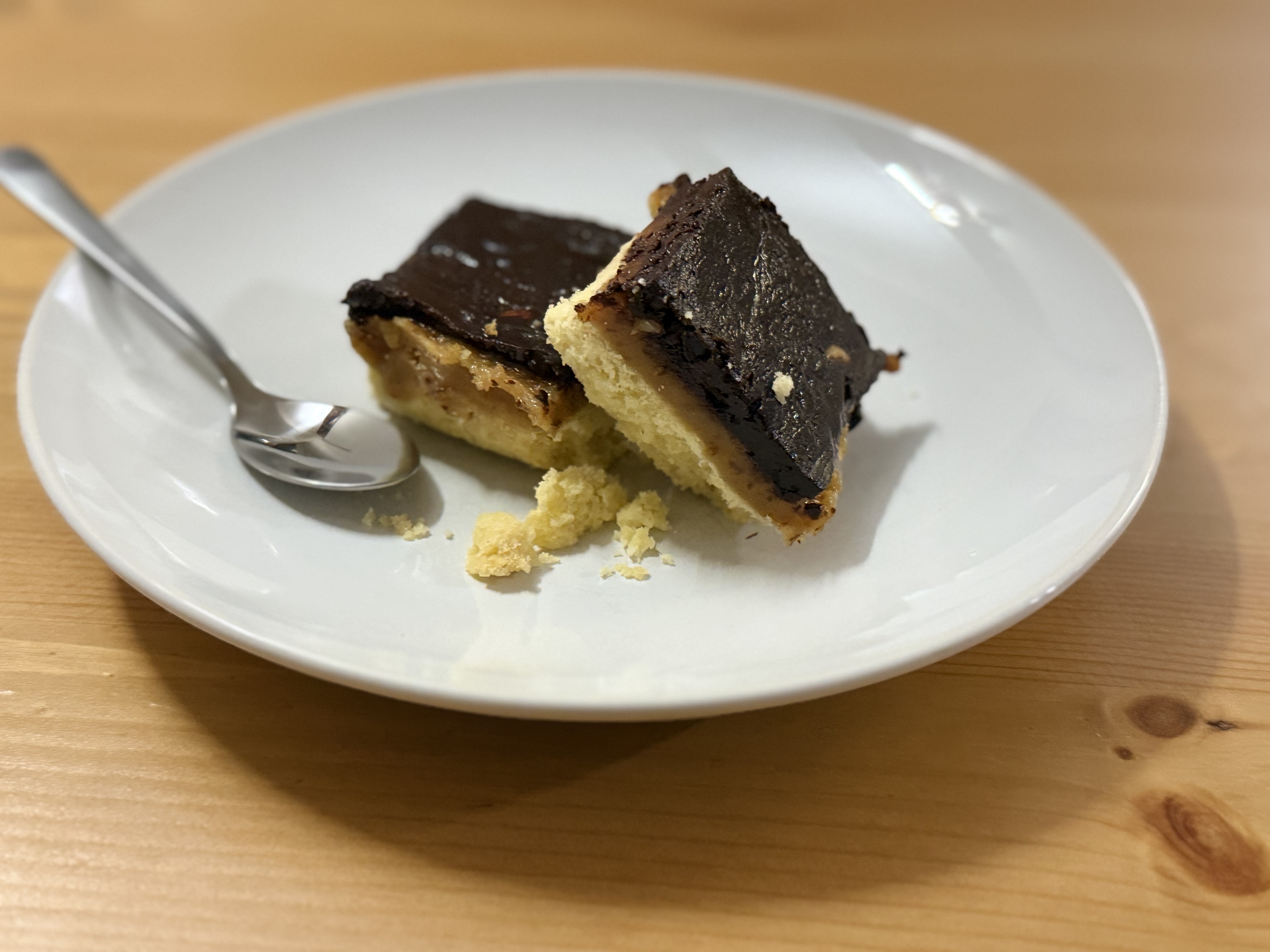
The caramel is made by heating condensed milk, sugar, and butter. In addition to this, to ensure that the caramel does not crystallise, some invert sugar syrup is added.
Sucrose (D(+)-Sucrose, table sugar) is dextrorotatory. Invert sugar syrup (glucose+fructose) is levorotatory, hence it is called “invert” (it rotates plane-polarised light in the opposite direction to sucrose). The invert sugars interfere with the sucrose lattice that tries to form, and hence crystallisation of the caramel is limited, giving a fudgy, gooey consistency.
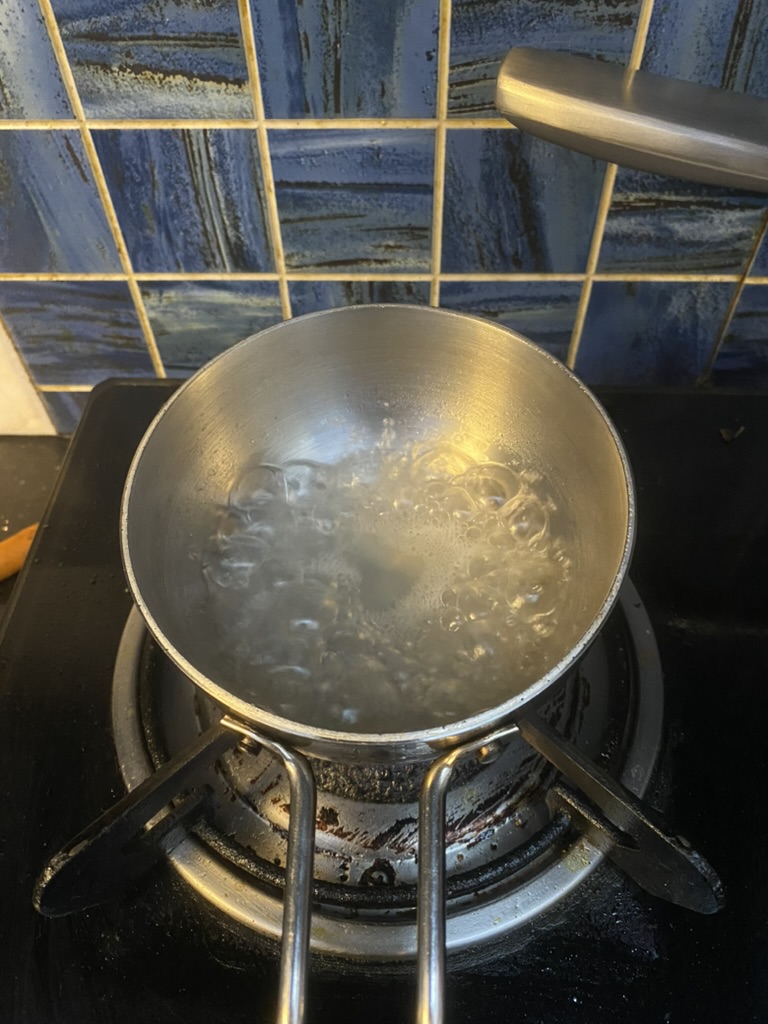
As I did not have invert sugar syrup, and I did not want to use honey (which contains invert sugars) because of the distinct taste that it would impart, I boiled a sucrose solution with some lime juice to create the invert sugar syrup. The acid in the lime juice catalyses the hydrolysis of the sucrose molecules, which produces a mixture of D(-)-Fructose and D(+)-Glucose. The chemical reaction is given below:
$$ \ce{C12H22O11 + H2O ->[H+] C6H12O6 + C6H12O6}$$