Telescopes
In the early days of the pandemic (mid 2020) I did a project on gravity. This led me to research Galileo, Kepler and their telescopes. Inspired by them, I started playing around with lenses I got from a science kit and magnifying glasses. Over the next two years, I developed several iterations of refractor telescopes with increasing magnification and image quality.
Magnification is given by:
$$ M=\frac{f_{o}}{f_e}$$
Where $f_o$ is the focal length of the objective lens and $f_e$ is the focal length of the eyepiece lens.
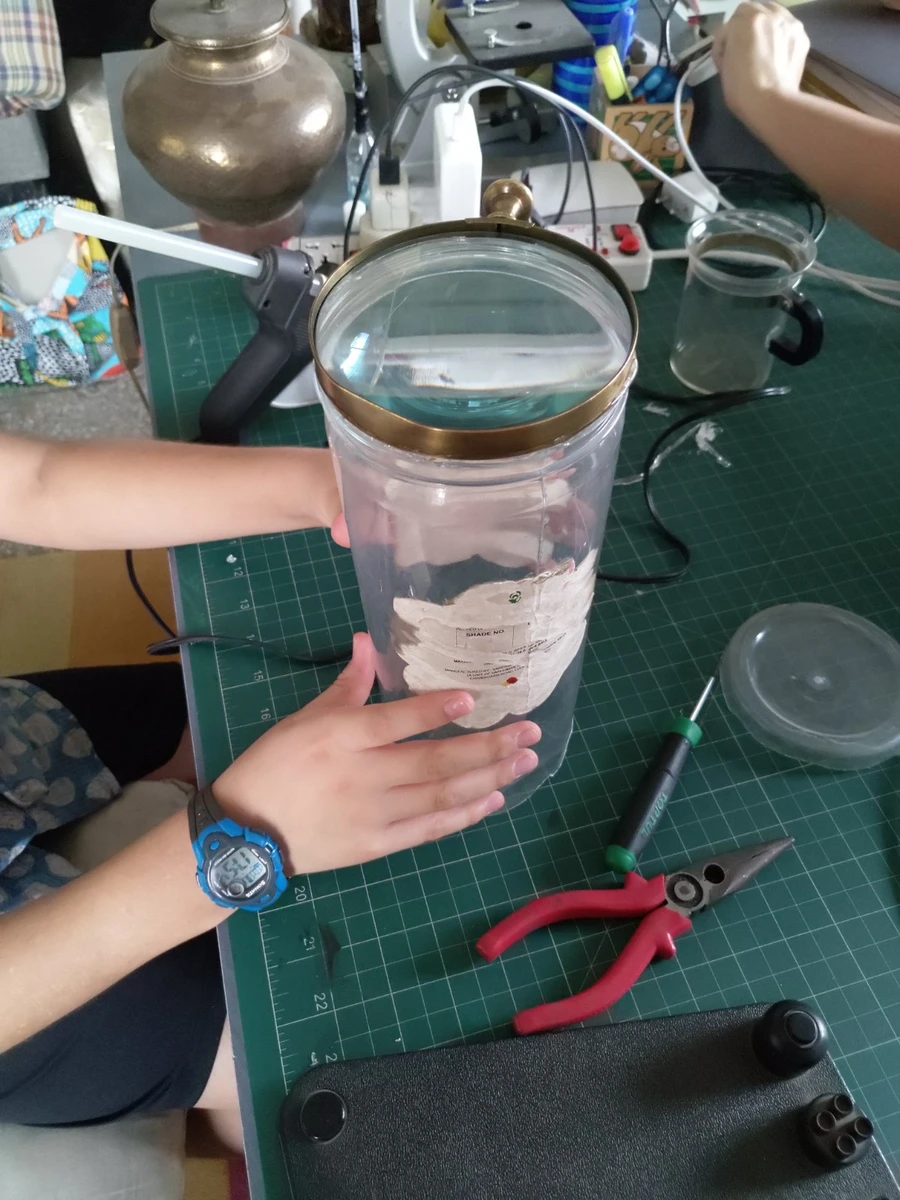
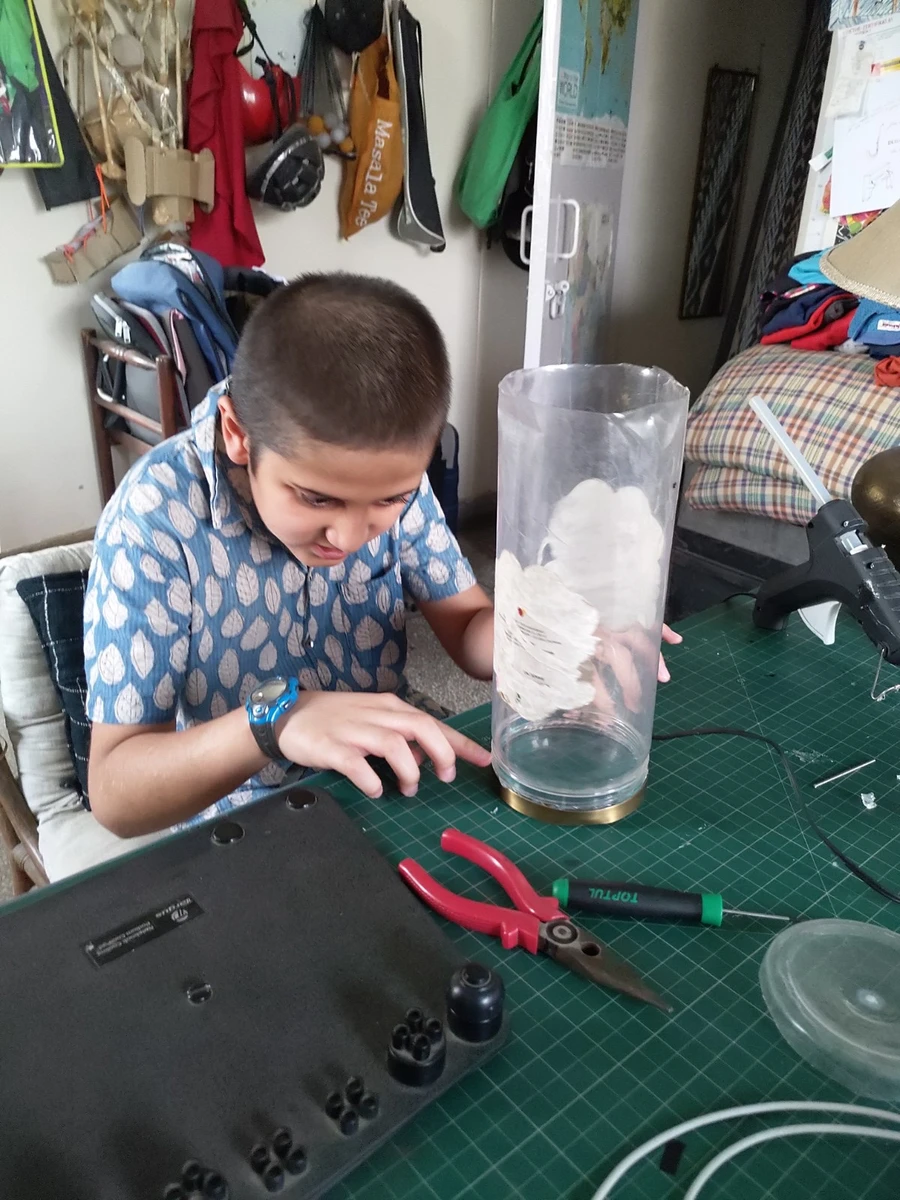
Model 1 was a simple Keplerian refractor, with two lenses (objective and eyepiece) each with a focal length of 20cm. Therefore, the resulting magnification was 1X (at the time, these were the only convex lenses with focal lengths not extremely large). The tube was made of a plastic tube wrapped in paper, held together with tape and hot glue.
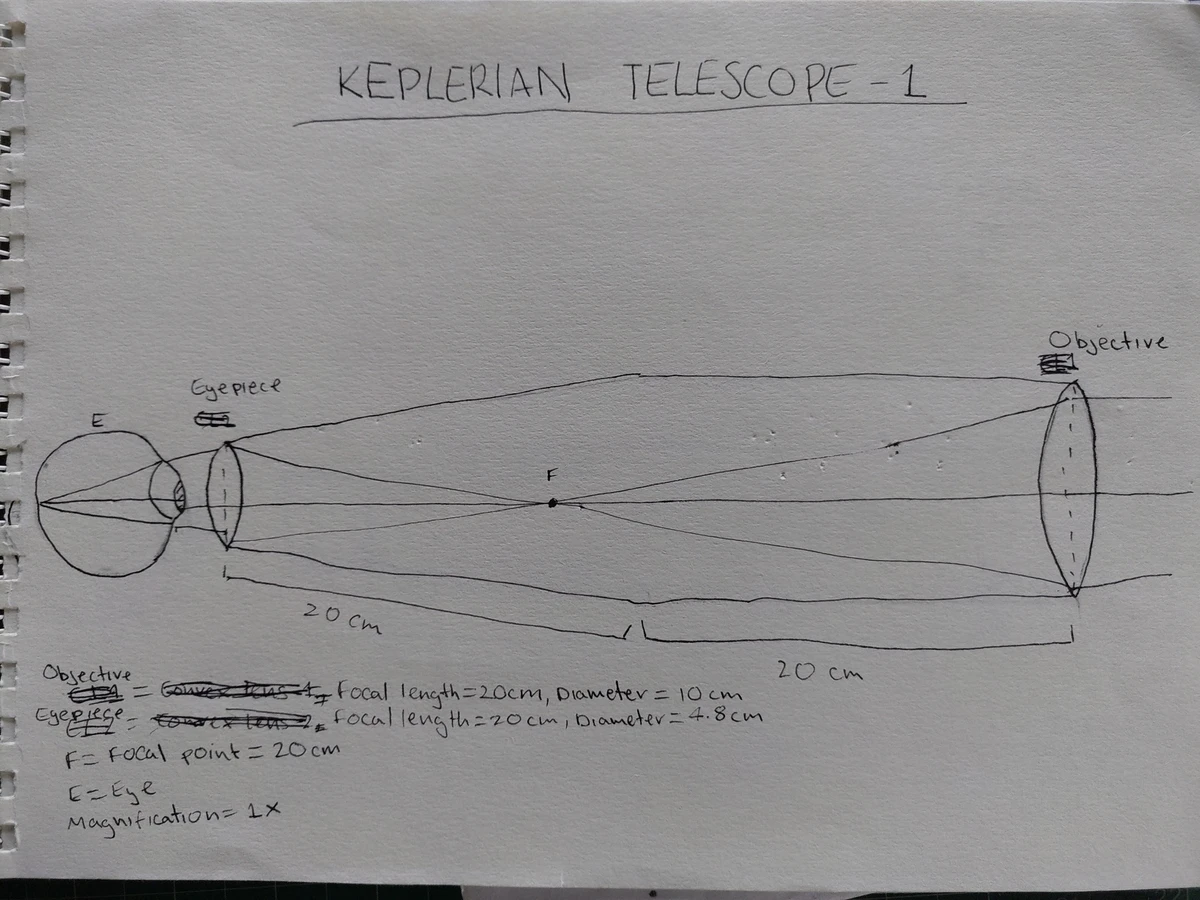
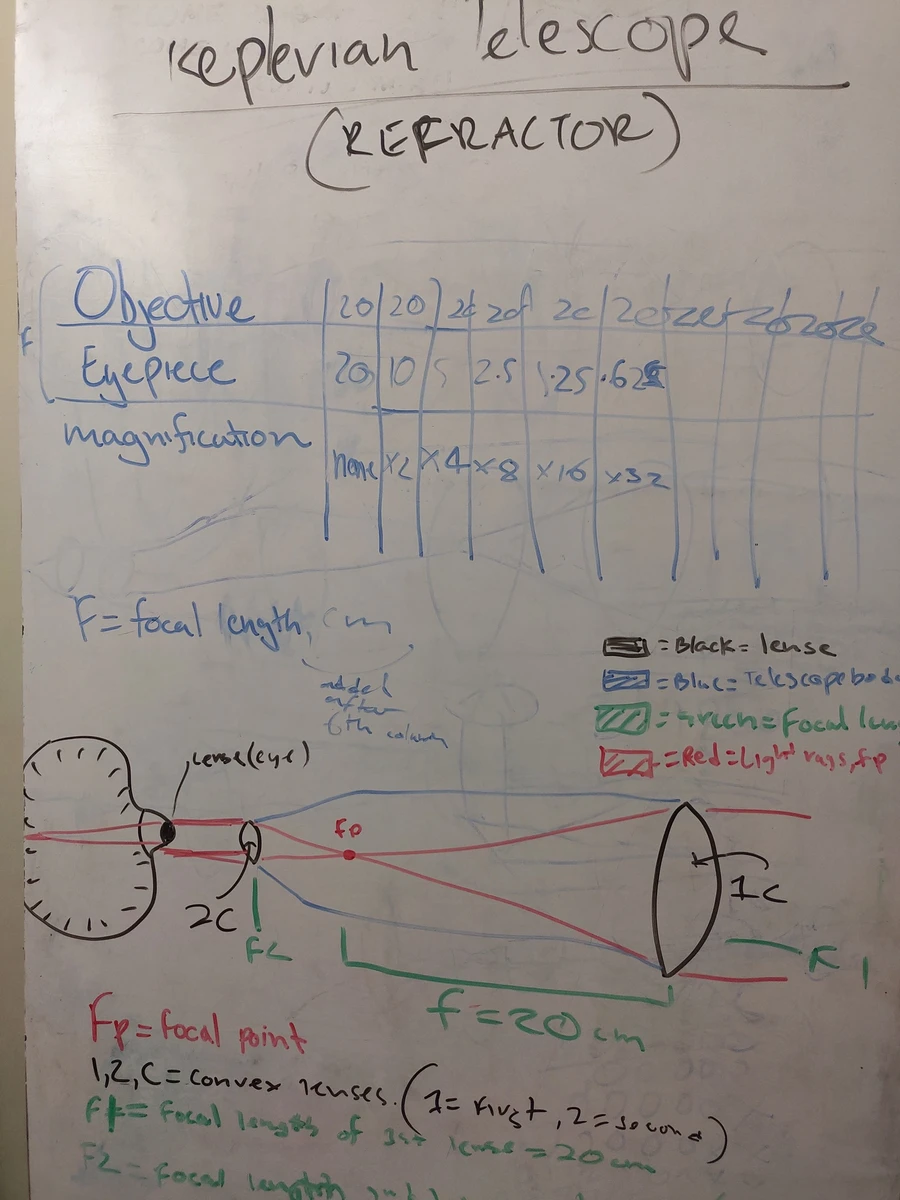
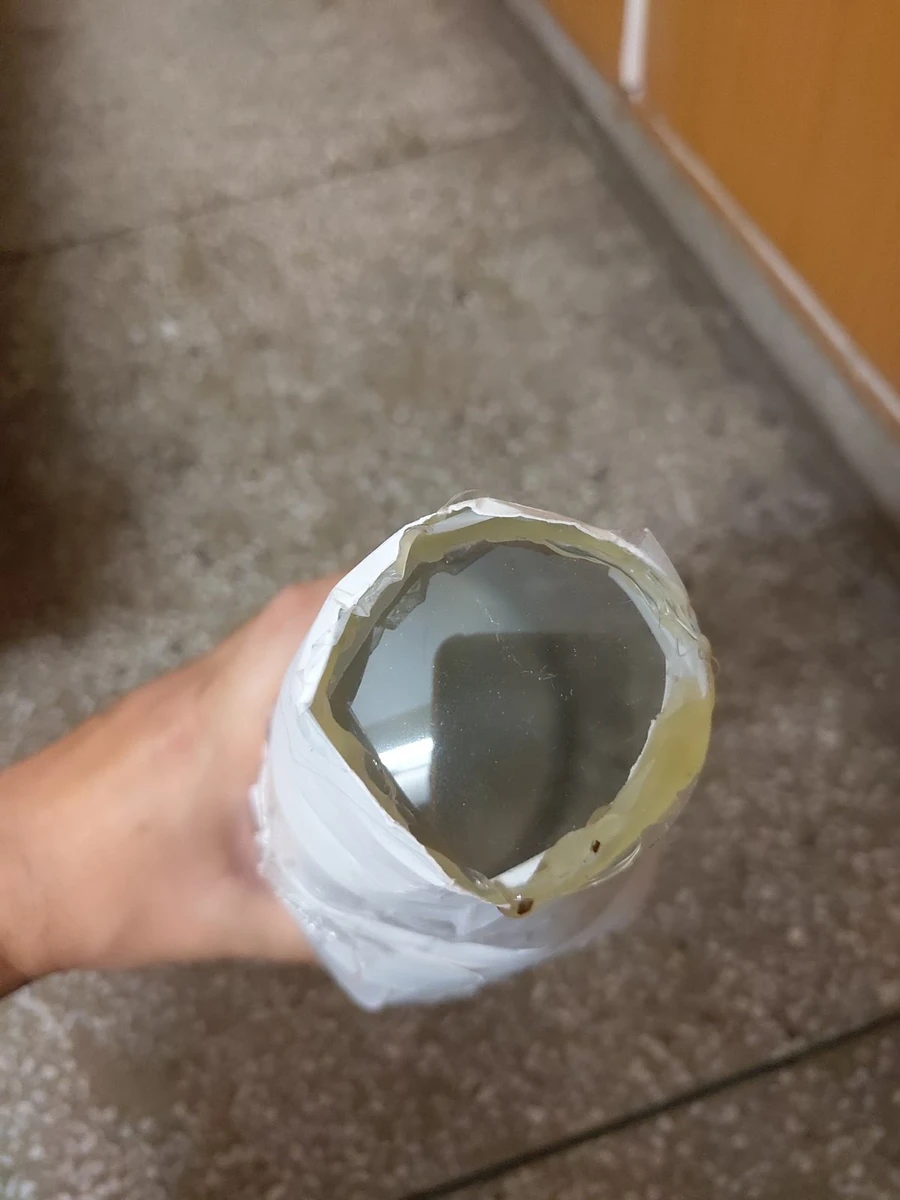
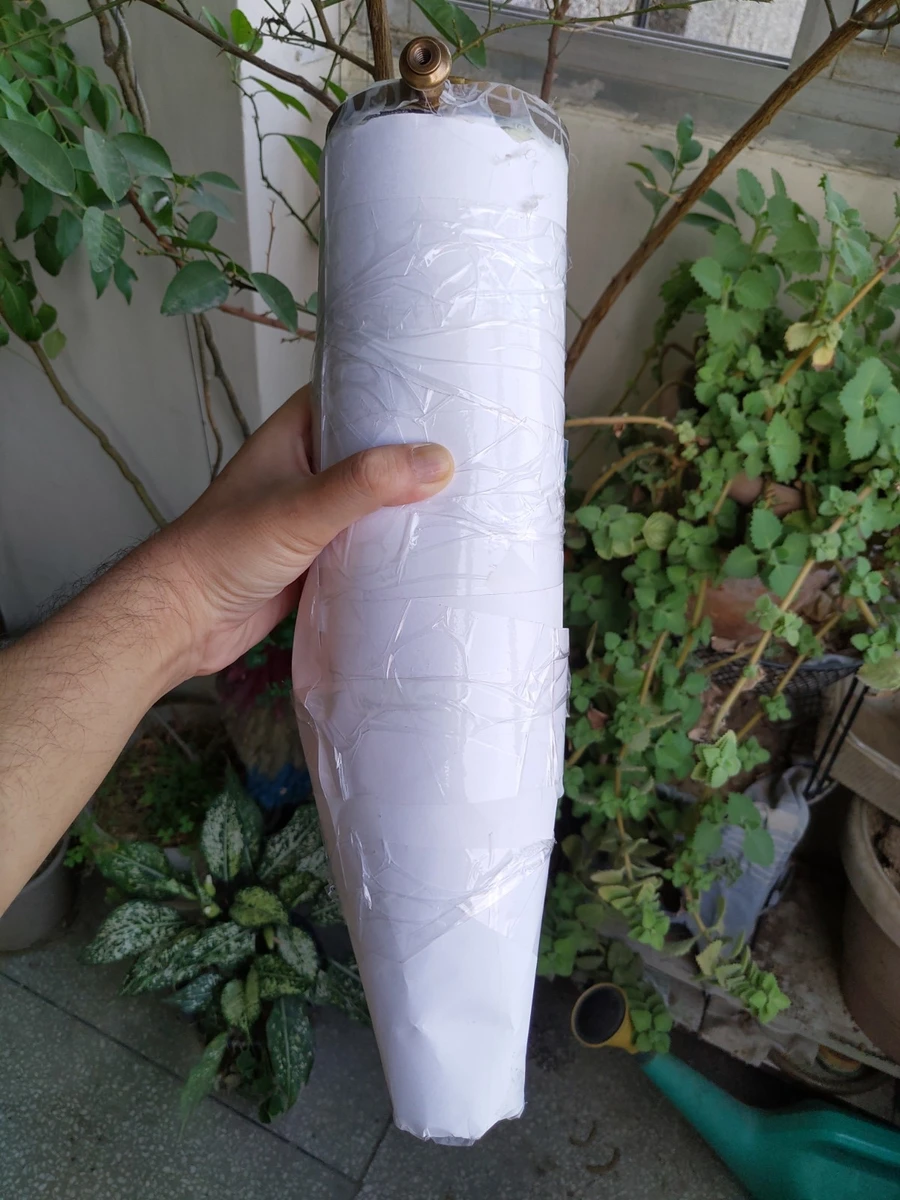
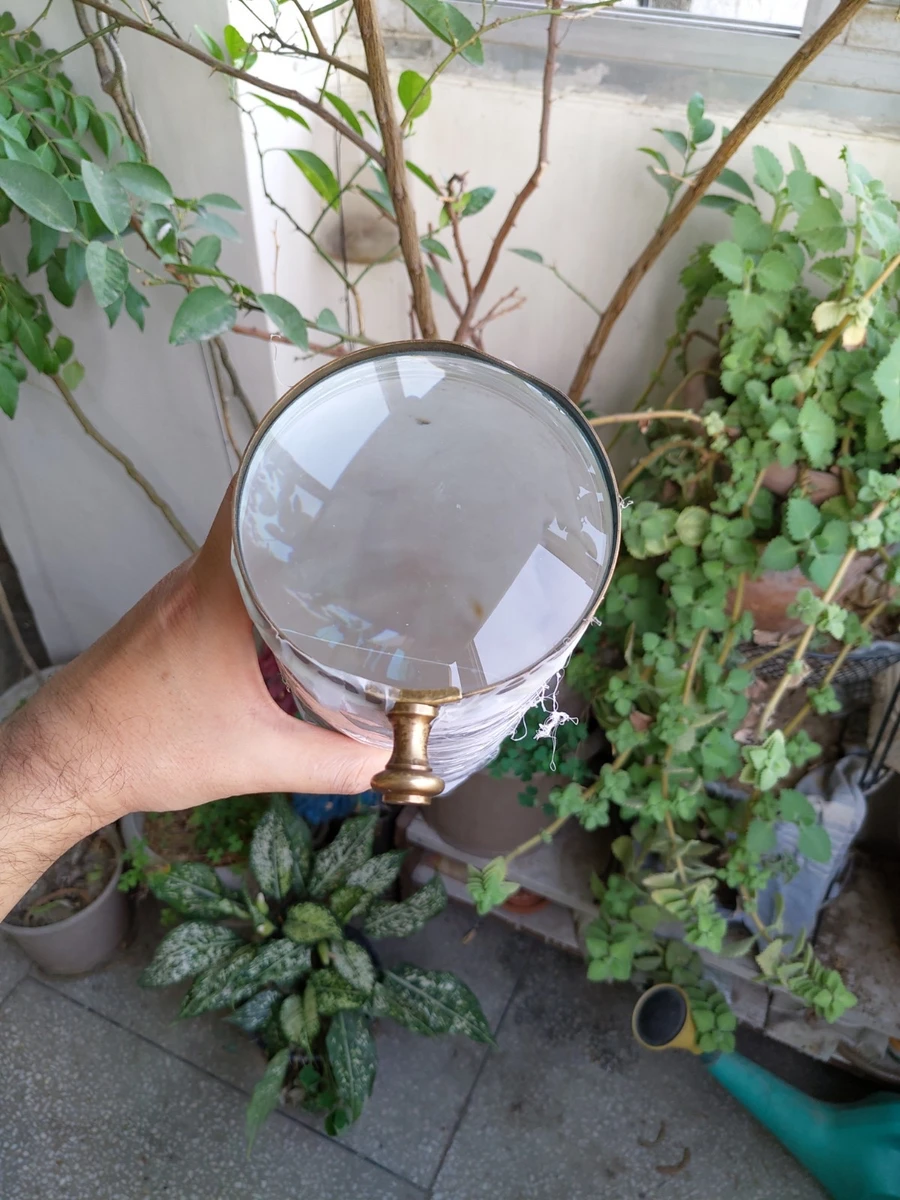
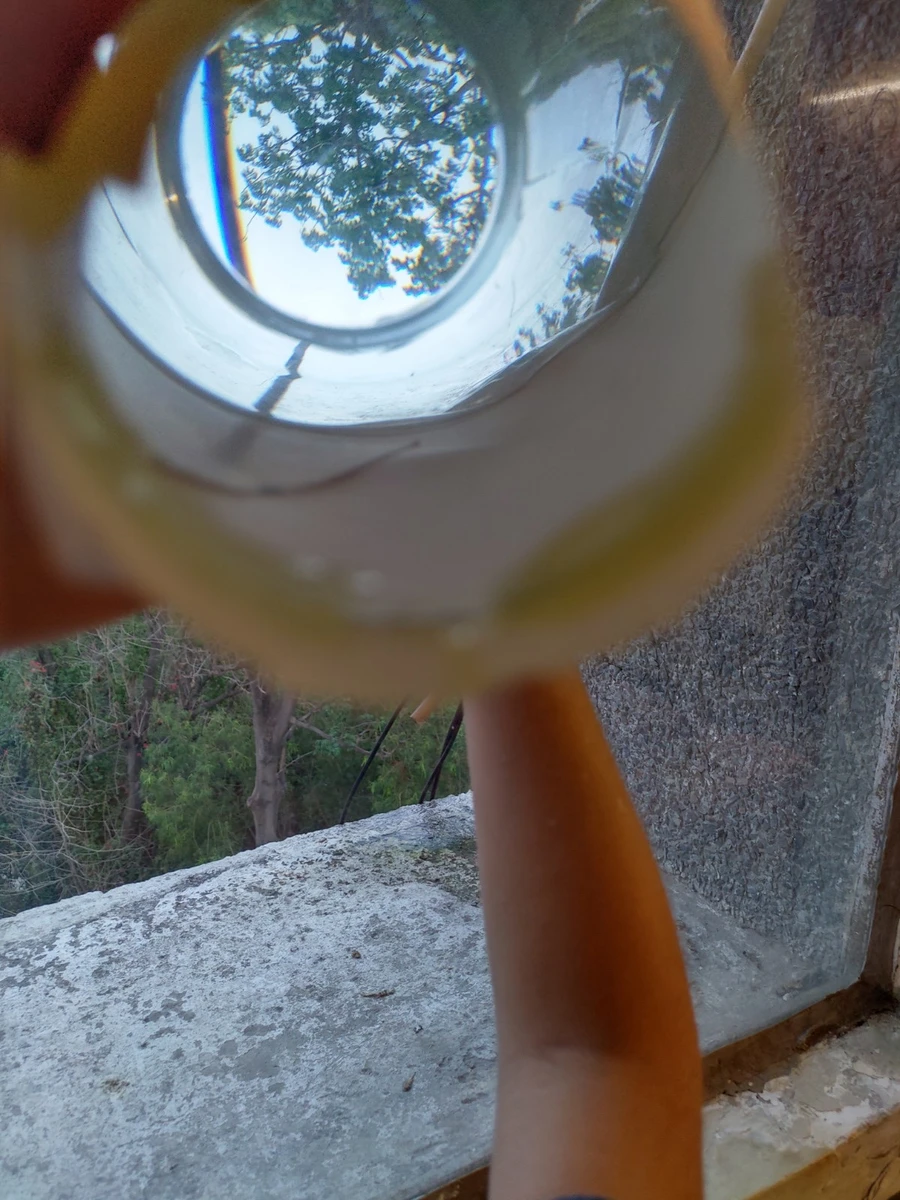
In search of an eyepiece with a smaller focal length (to achieve a magnification greater than 1X), upon doing some further research I discovered I could use the 10X eyepiece of my compound microscope, which has a focal length of 2.5cm. Therefore:
$$M=\frac{20}{2.5}=8X$$
The very next day, Keplerian refractor Model 2 was built, using the cardboard tube around which kitchen towels are wrapped for the body, the 20cm lens (which was the eyepiece in Model 1) as the objective, and the 2.5cm microscope lens as the eyepiece.
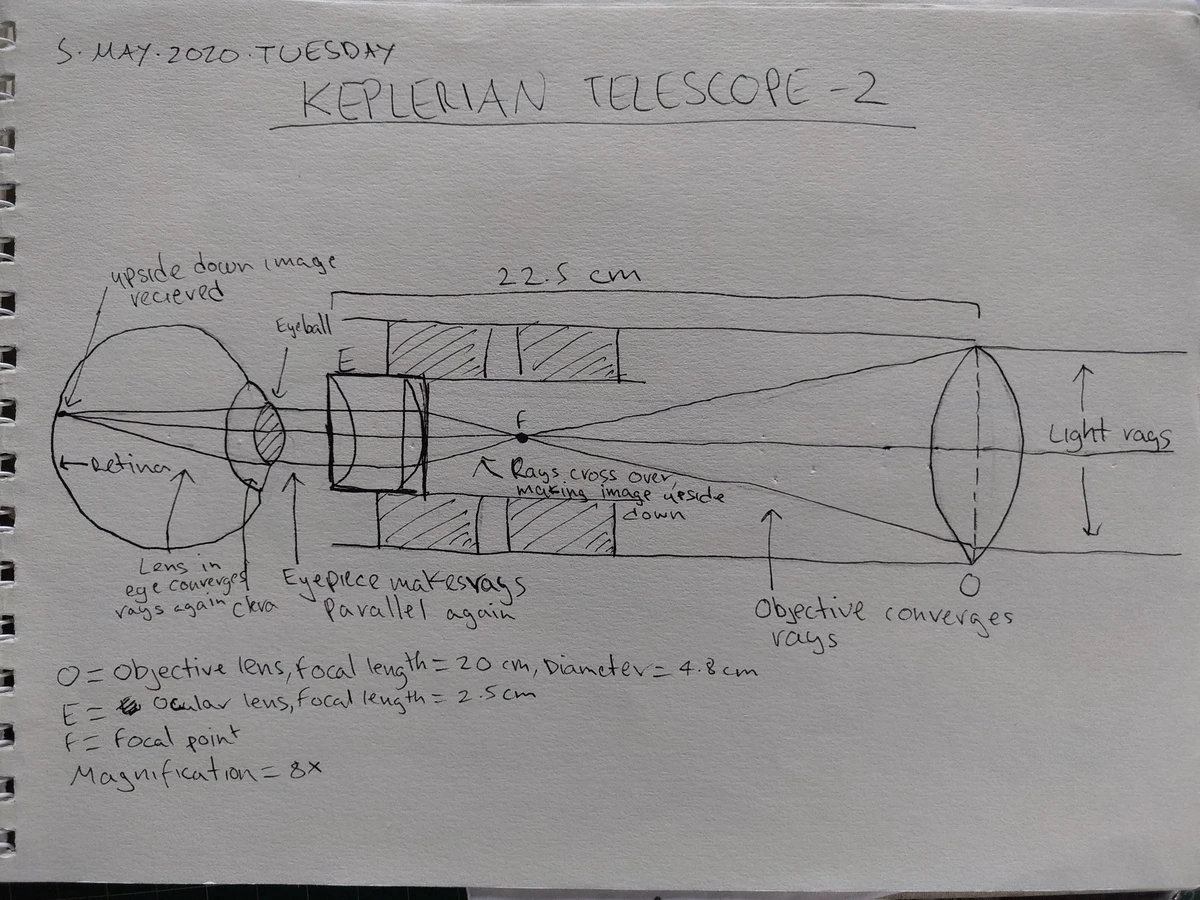
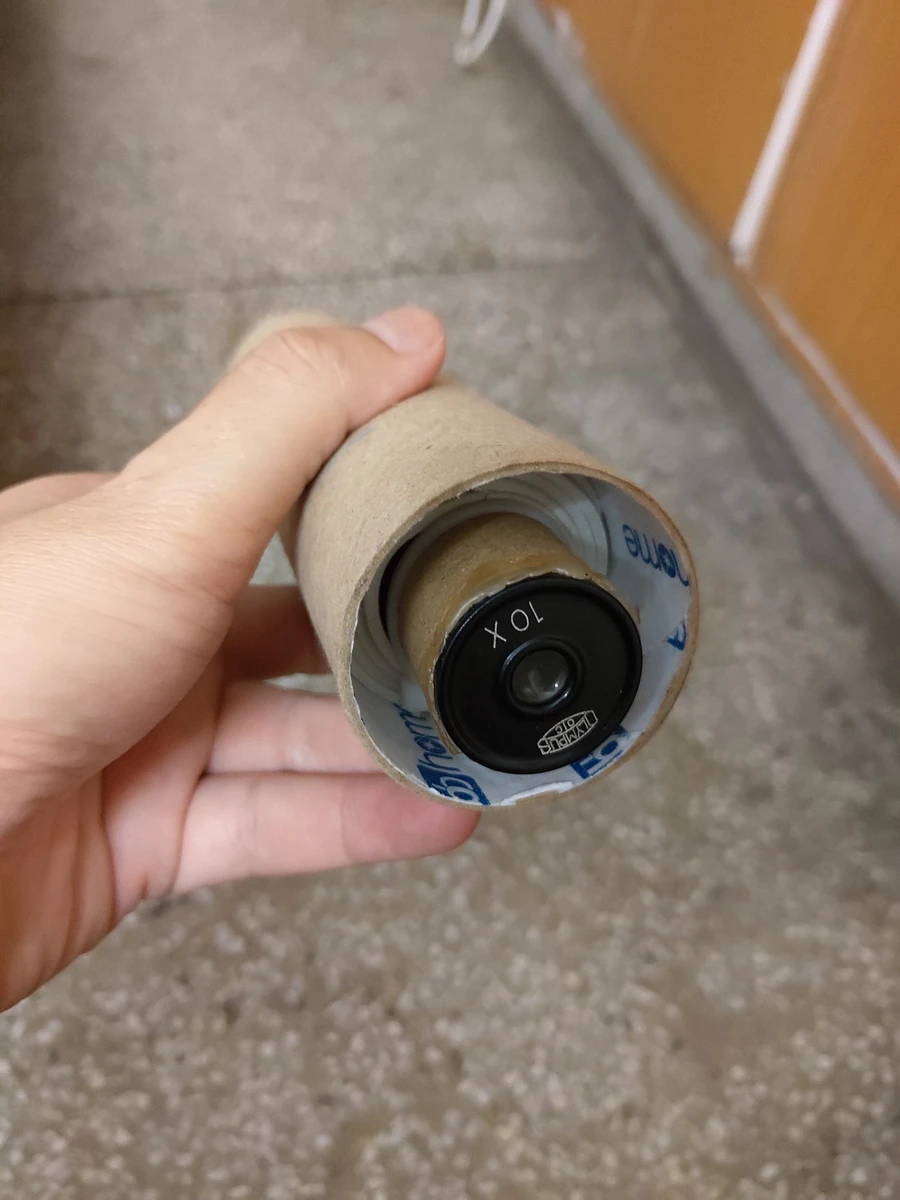
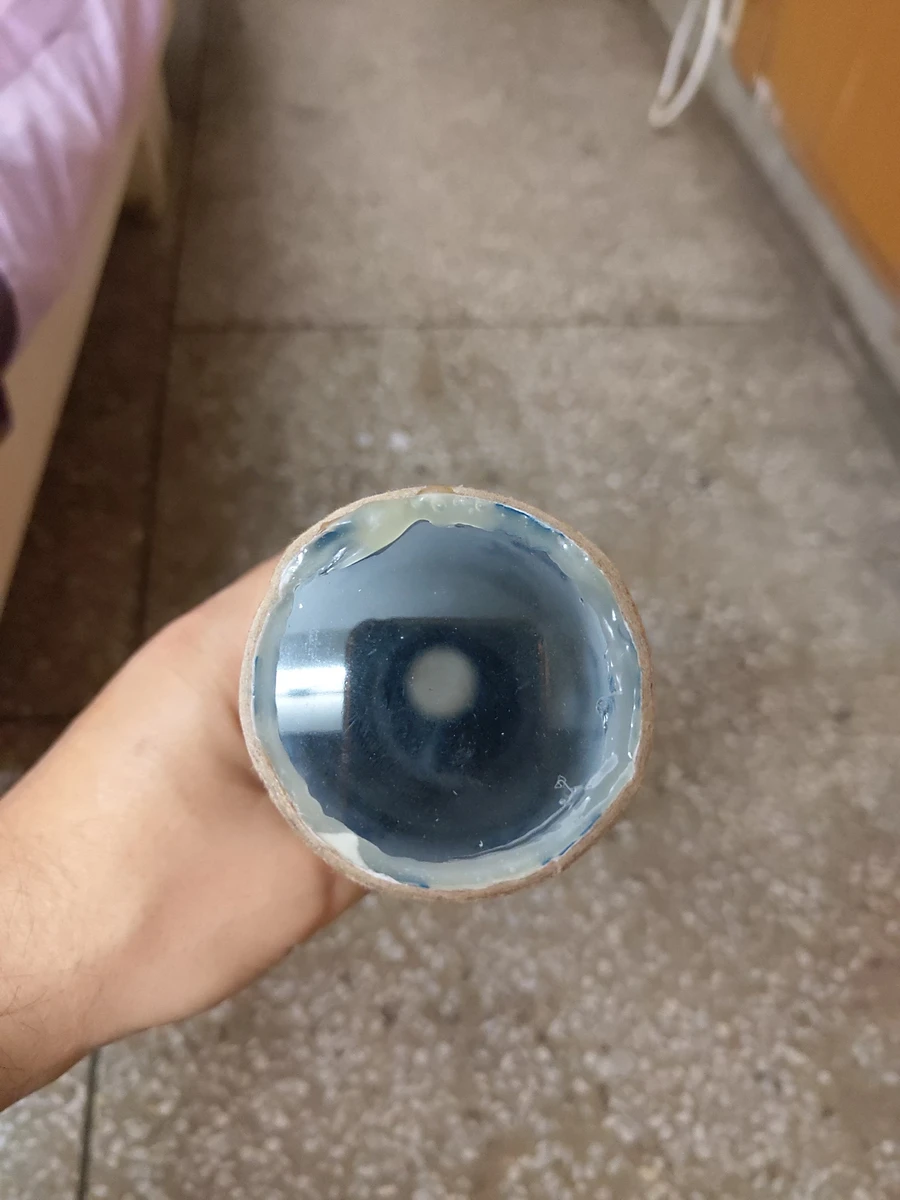
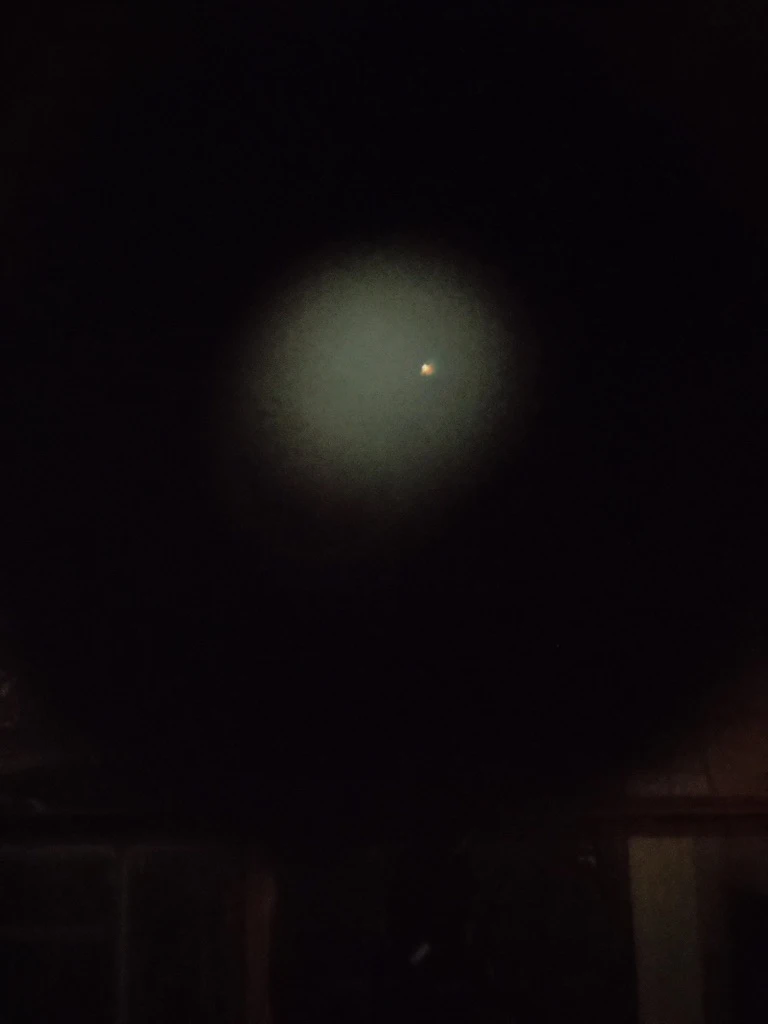
Soon after, searching for greater magnification, the objective of Model 2 was replaced with a 50cm focal length lens, and thus Keplerian refractor Model 3 was created (with a magnification of 20X). The eyepiece was set into a sliding tube to enable better focusing (since the focal length of the objective, ordered from Amazon, was not exactly 50cm). I also constructed a contraption to mount the telescope onto a tripod using a Meccano set, for better stability. The mount featured vertical protrusion to act as a makeshift viewfinder, and a handle to allow panning.
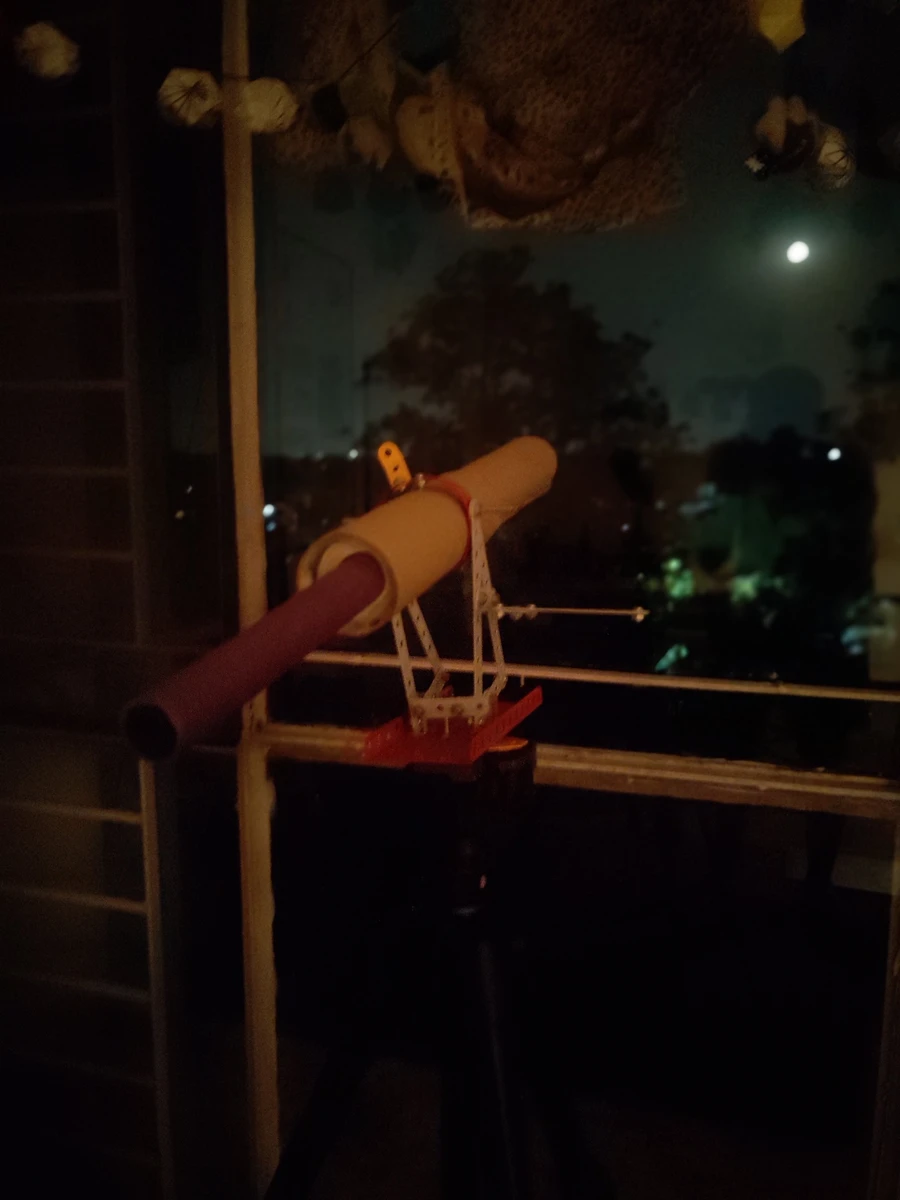
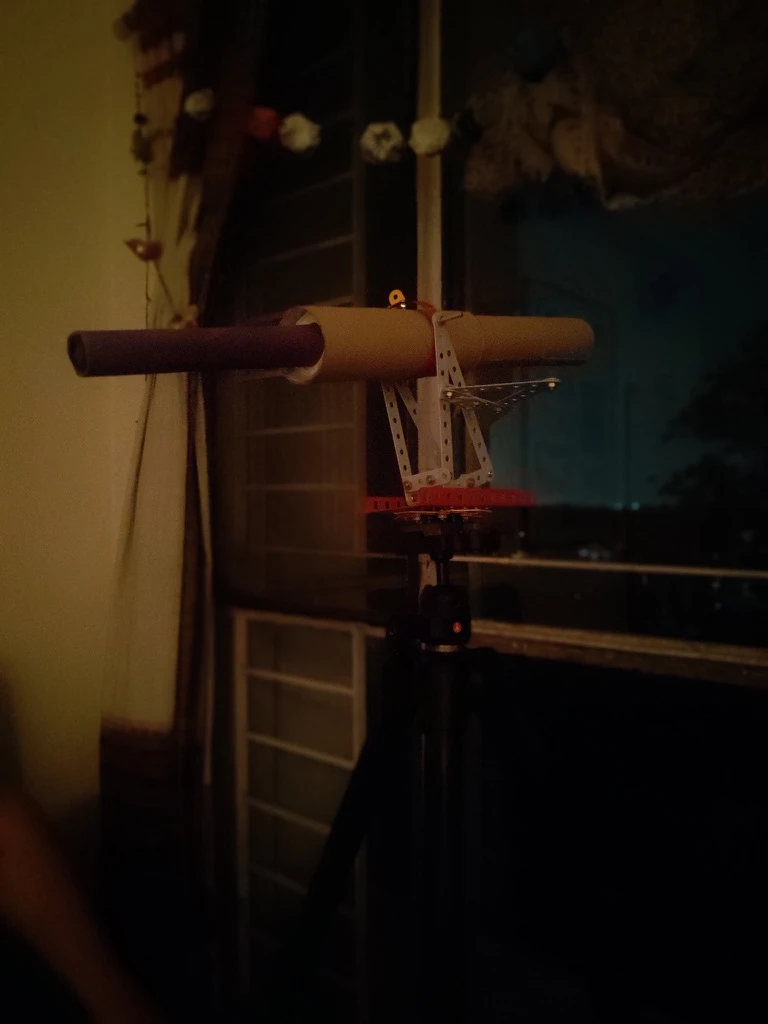
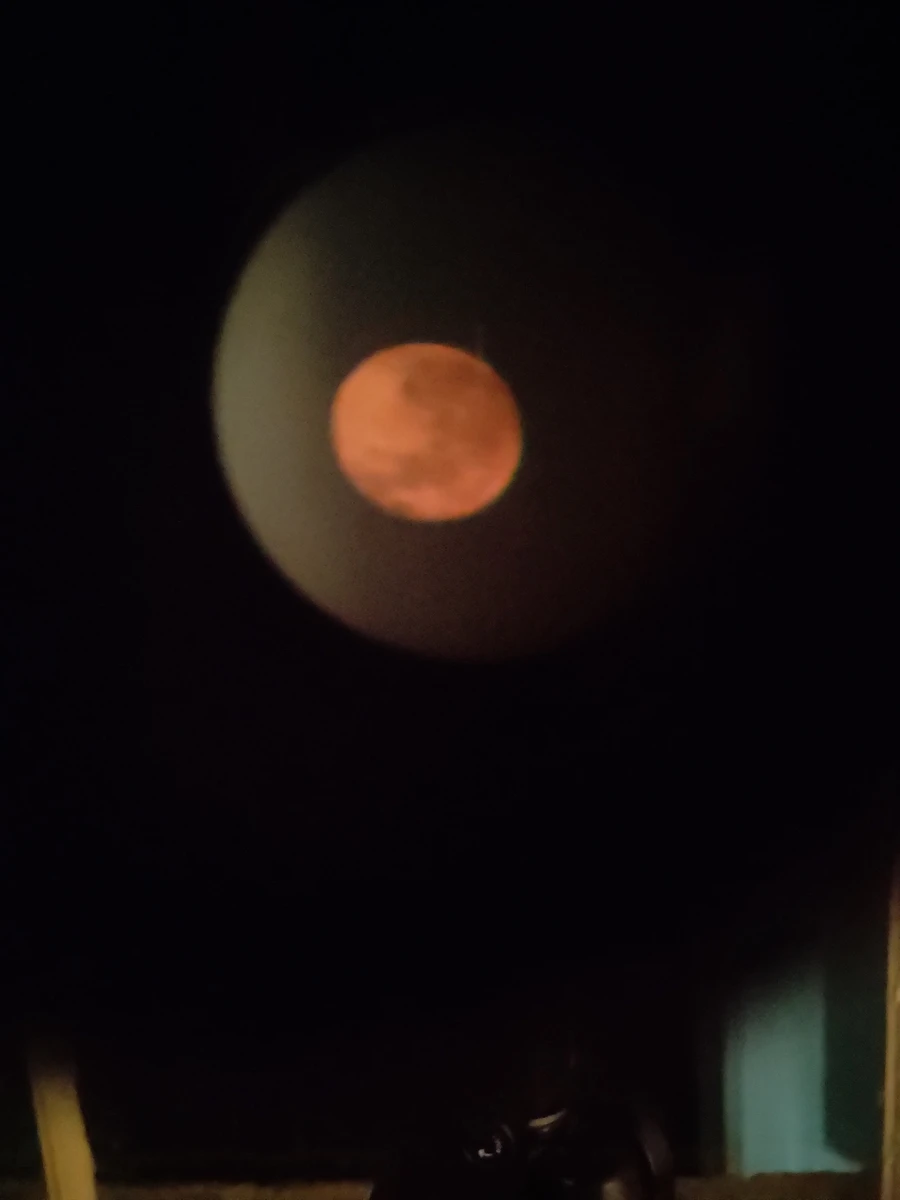

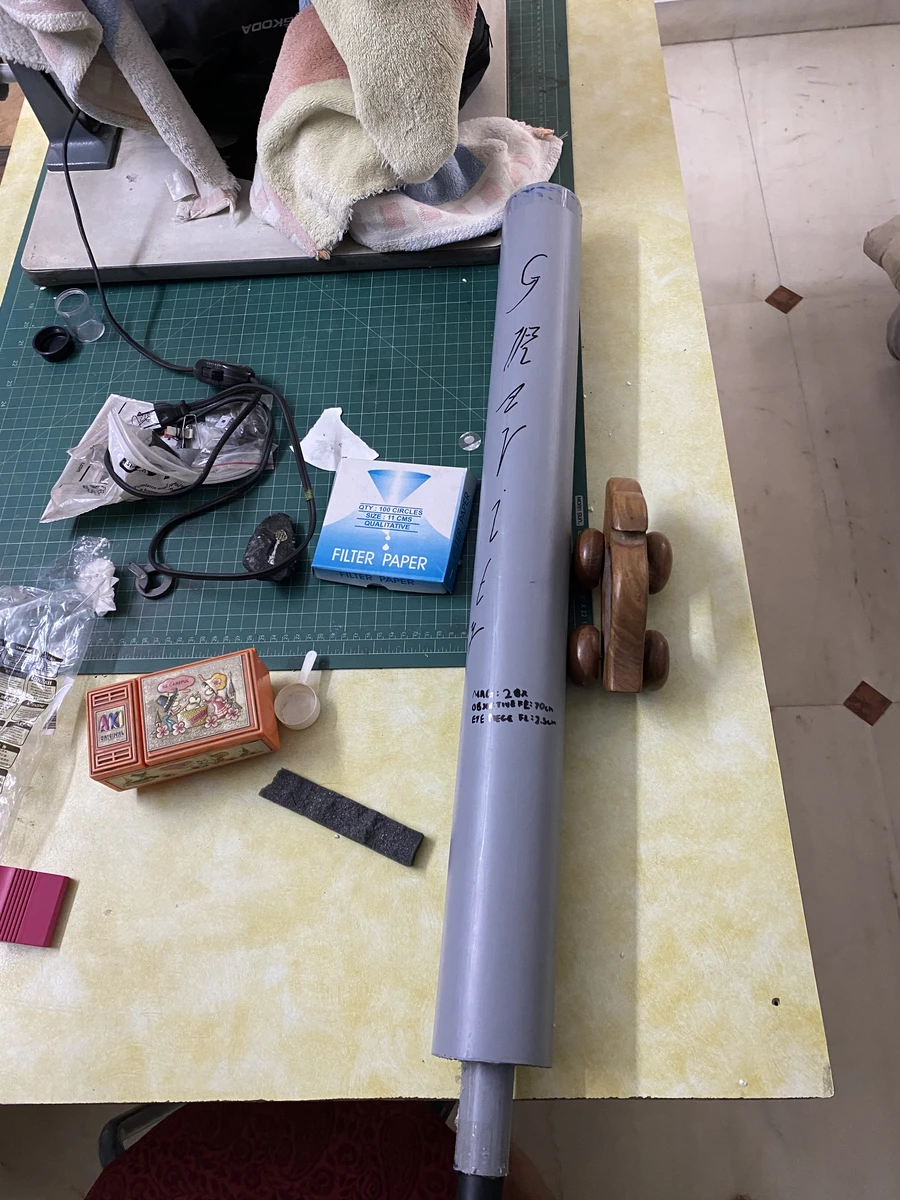
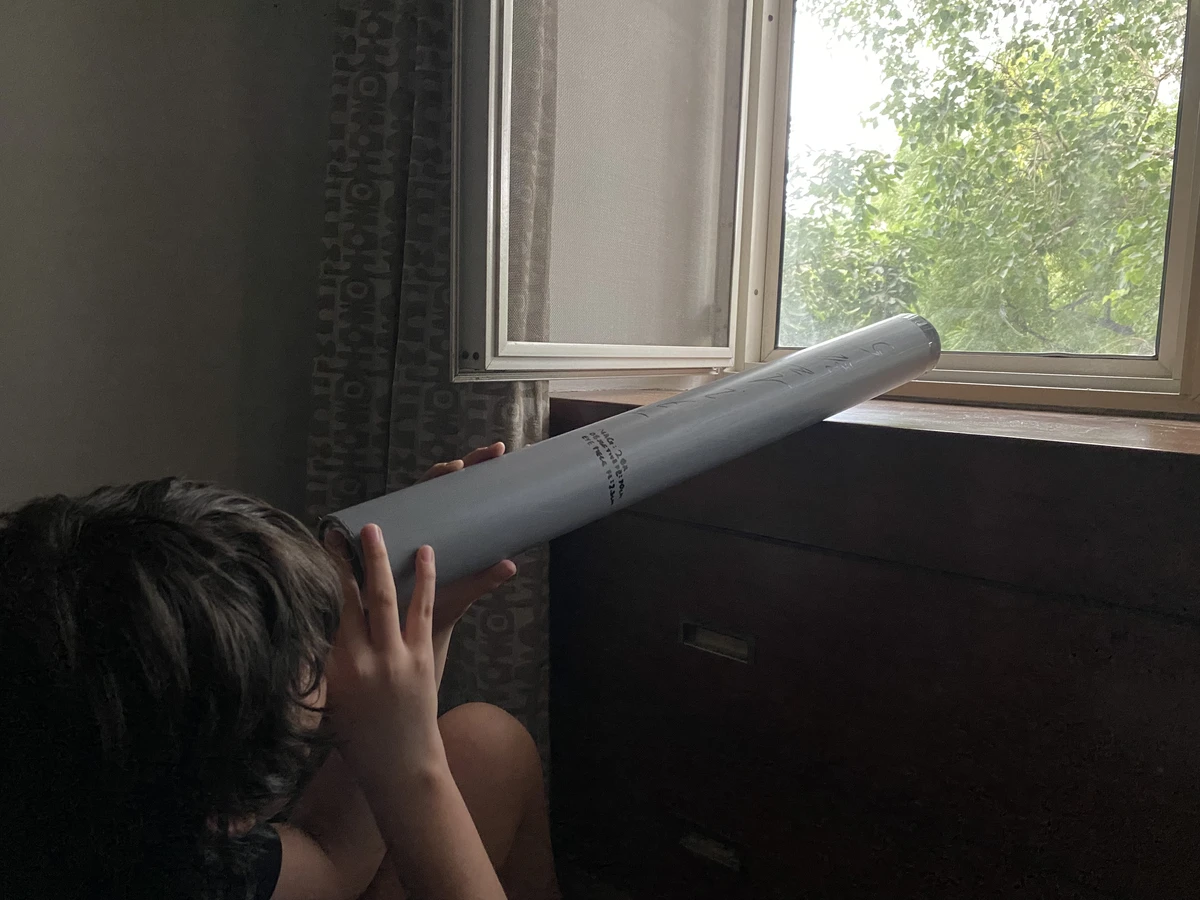
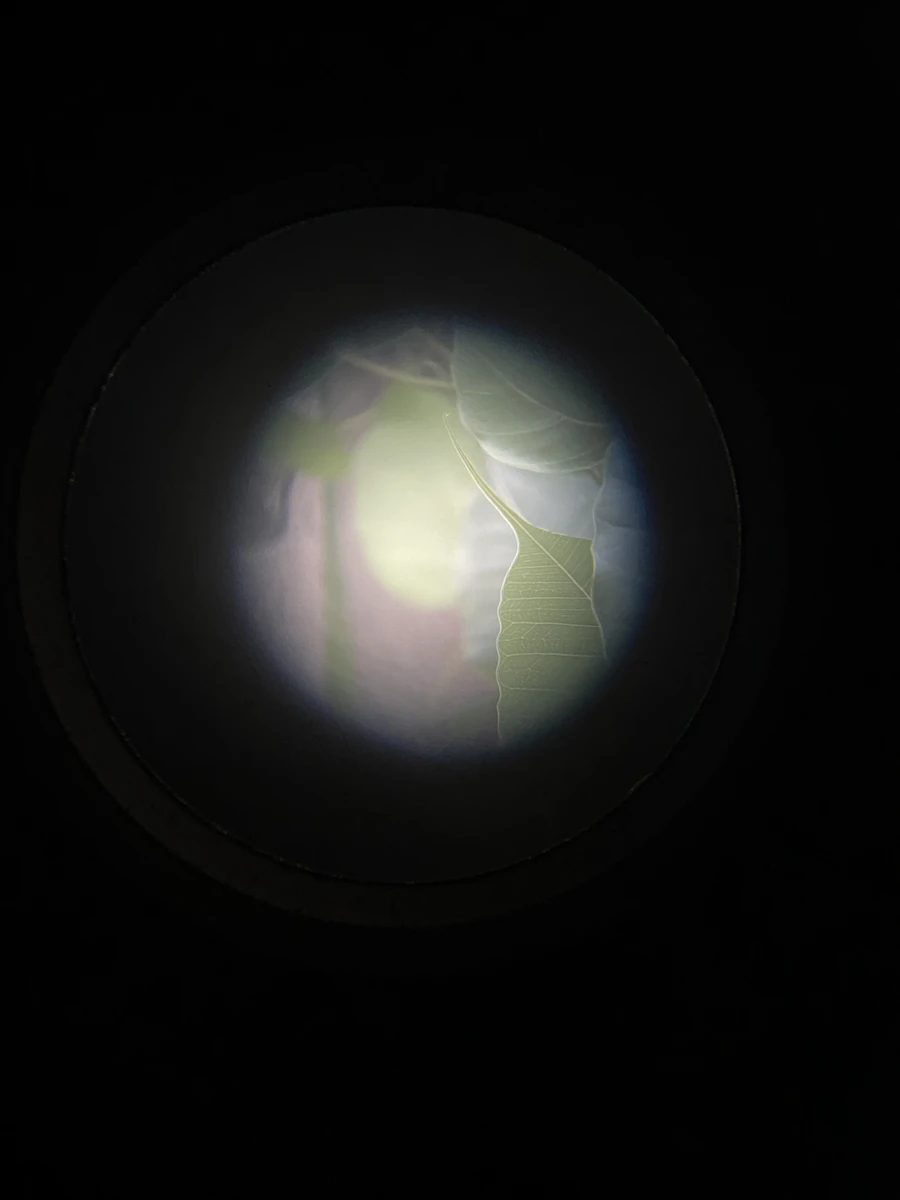
In 2022, work began on an upgraded model - using a 70cm focal length objective - that provided a magnification of 28X. Nicknamed Gravity, it featured achromatic objectives and eyepieces, adjustable focus and a PVC tube. This was by far the most rugged telescope built so far, and the one which provided the best image.